

A brand can buy an entrance arch, a banner or a spot in the broadcast. That gives it presence, but it still doesn't explain what it makes possible for the fans. The creative leap in sponsorship happens when an acquired right is turned into a recognisable role within the event.
The useful question for a sponsor is not only where we appear. It is what the audience will be able to do thanks to our presence.
A contract hands over rights, and production gives them meaning
A property can offer space, access to players, screen time, hospitality or content. Every right comes with operational and legal limits. Activation begins when you decide which brand objective it can resolve within those limits, and why that solution matters to the people who have turned up.
A branded space can guide, surprise, give access or invite people to play. A meeting with talent can be a queue for a photograph or an experience whose format sparks a conversation. A moment on screen can reinforce what the stands are doing if the stage management builds it into the running order. The difference is not in adding elements: it is in steering them towards the same role.
Visibility keeps its value and has nothing to apologise for. PwC notes that traditional rights remain a significant business, even as sponsors demand better evidence of audience behaviour. It is about knowing which part of the objective exposure resolves and which part calls for an action.
Inventory can be read in four columns
First you write down the actual right, without inflating it. Then you define what the audience needs at that moment. The third column describes what the brand makes possible, and the fourth what evidence will be observable. This sequence avoids pitching a flashy mechanic that any sponsor could sign off and in which the brand turns out to be interchangeable.
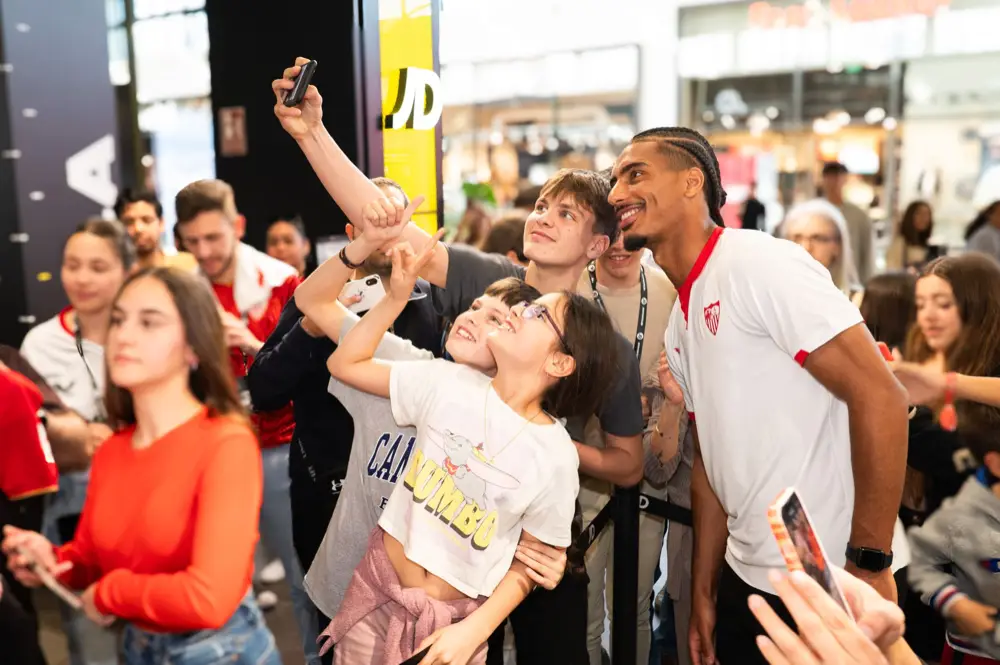
At a store opening tied to a club, for example, access to players has value because people want to meet them. Add an interview area and a piece of video conceived for that occasion, and the activation can produce an in-person memory and a story worth distributing. None of this allows you to claim incremental sales without a method to measure them.
From a right to a defensible result
- RightWhat has been contracted
- RoleWhat the audience needs
- ActionWhat the brand makes possible
- ProofWhat can be verified
GDN framework · Conceptual reading, no quantitative data
Visibility and action call for different kinds of proof
The delivery of branded assets can be documented with photographs, coverage and estimated audiences. A game mechanic can log entries, participants and completions. A hospitality experience needs a different kind of assessment, closer to the quality of the encounters and their follow-up. It is unwise to blend all those figures into a supposedly universal return indicator.
To claim a change in recall, preference or purchasing behaviour, you have to design additional measurements and establish what is being compared. A platform's data describes what happens inside it. A counted interaction is useful precisely because we know what it means and what it does not prove.
How to turn inventory into experience
| Right | Role for the audience | Appropriate evidence |
|---|---|---|
| Space in the fan zone | Playing or meeting | Usage, completions and observed experience |
| Access to talent | Bringing the protagonists closer | Participation and content produced |
| Screens and live direction | Giving meaning to a collective action | Actions logged and broadcast delivered |
| Brand assets | Identifying the sponsor | Delivery, coverage and estimated exposure |
Three questions the proposal should be able to answer
What does this brand bring that no other brand would?
What action or benefit will the fan perceive?
What will we be able to prove, and what will we have to research separately?
An activation must have a planned exit
A brand gains more when it is integrated with judgement into the rhythm of the competition or the show. Stepping in during the very moment the audience has come to live can tie the sponsor to the interruption. The plan should set its entrances and exits as it would for any element of the live direction.
That care calls for a single direction across property, sponsor, production, content and technology. If each team optimises its own piece without that coordination, the audience ends up with a sum of disconnected impacts.
Our view at GDN
At GDN we want sponsorship to be seen and for people to understand why it is there. We design the brand's role, produce it within the space and coordinate its content and its possible interaction with the audience. Live operations impose limits; used well, those limits make the idea more relevant.
A case that proves it
At the opening tied to JD Sports and Sevilla FC, the credentials capture a meeting with players, a mixed zone and the recording of a programme for YouTube. The right of access to talent became an experience and content. The credentials also document Movistar's activation at the basketball Copa del Rey across three seasons, with graphics, branded assets, content and opening shows. Both examples show different productive roles; we do not publish sales or brand results that are not substantiated.
Frequently asked questions
Does a sponsor's visibility still matter?
Yes. It resolves exposure and recognition objectives. Activation adds a role and an action when the objective calls for something more.
How do you choose an activation mechanic?
Starting from the available rights, the audience's need, the brand's territory and the operational moment. The technology is chosen afterwards.
Does a counted participation prove return on investment?
It proves that an action was logged. Financial return or a shift in perception require relating it to costs, objectives and, where relevant, complementary measurements.
Can a sponsorship be activated without capturing personal data?
Yes. You can create experiences and record aggregate usage. Identifying data should only be requested when it serves a clear purpose and there is a proper legal basis for processing it.