
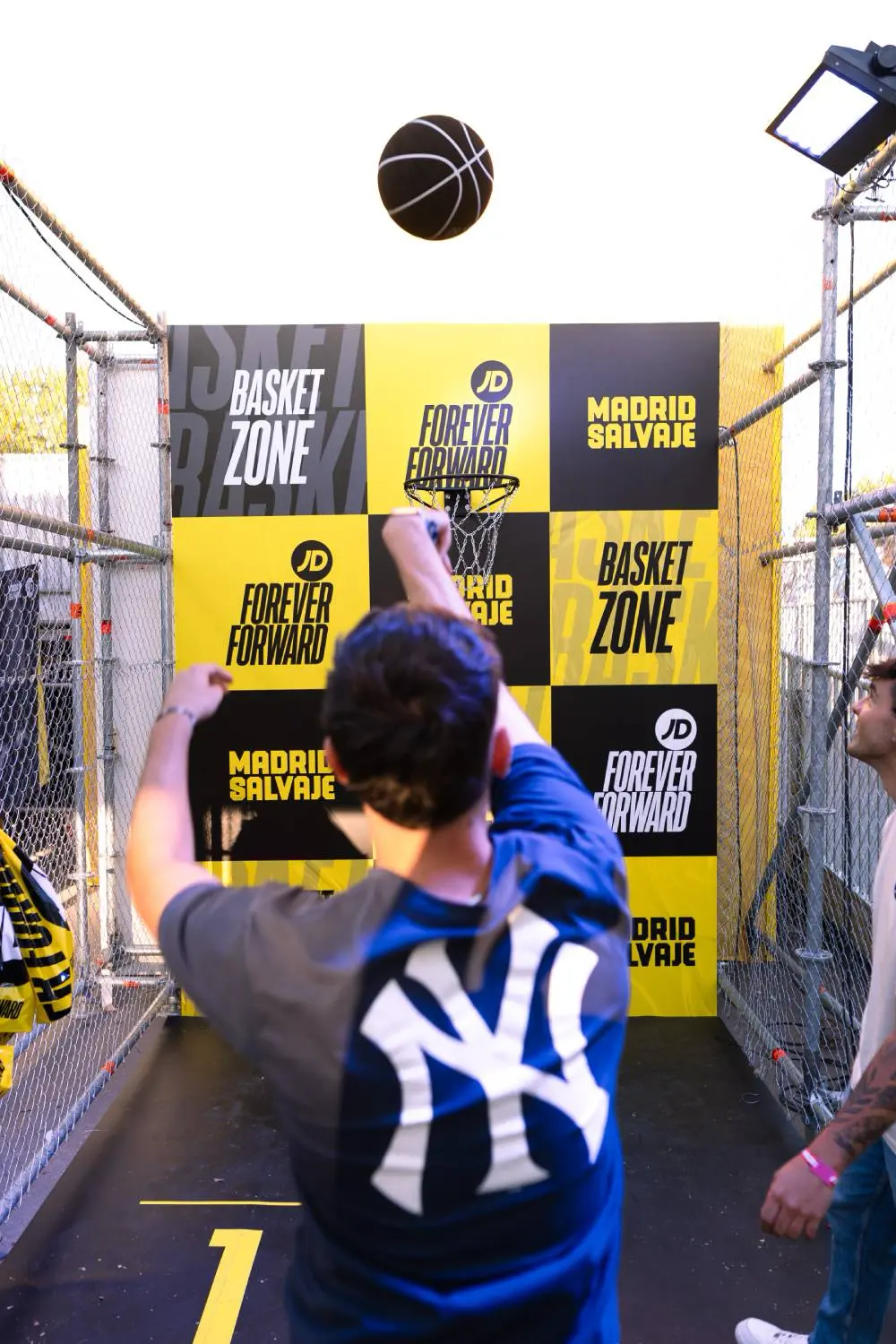
Adding points and a ranking table to an activity is not enough to make anyone want to play. A game lets you grasp an objective, make a decision, receive a response and adjust what you do next. At an event, moreover, that loop has to fit within the time available and coexist with the main show.
The leaderboard shows who is winning. The game exists long before that: in the decision each person wants to make and in what happens afterwards.
The first question is not what prize we give
A prize may draw a first attempt, but it cannot rescue a confusing mechanic. You have to define which skill, knowledge or instinct is being put into play. Predicting a result, choosing a strategy or solving a collective challenge are different actions. Each one demands rules, information and a consequence that can be understood.
In Premier League Fantasy, for instance, decisions about the squad and transfers feed into a score for each gameweek. The reference helps to picture a well-articulated loop, but it does not mean an event game should copy its complexity. During a break, a single choice with a close-at-hand outcome may be all you need.
Forrester points in 2026 to the appetite for more participatory experiences. That demand does not license gamifying every moment: sometimes a conversation or a demonstration works better than competing.
Readable tension and a timely response
The player needs to know the objective, the options and the state of play. A scoreboard of context-free numbers tells you nothing; a leaderboard in which the same people always lead can discourage those who arrive late. The uncertainty has to be interesting, and the distance to an improvement has to feel within reach.
Feedback completes the gesture. If someone votes and sees no effect, they have simply filled in a screen. If their choice shifts the story, unlocks a clue or adds to a team, they understand that they are playing. The stage management, the screens and the host are part of the mechanic as much as the software is.
The rules must also be fair. An activity based on knowledge can exclude those discovering the competition for the first time; one based on speed can penalise whoever has the poorer connection. Designing an entry point for newcomers and a route of progress for experts widens participation without pretending to perfect equality.
A game needs a complete loop
- ObjectiveI know what I am trying to achieve
- DecisionI choose an action
- ResponseI see what has changed
- ProgressI want to try again
GDN framework · Conceptual reading, no quantitative data
Not every game needs continuity
A ninety-second challenge can produce a memorable moment. A fantasy game, on the other hand, needs reliable data, gameweeks, an understandable score, updates and reasons to come back. A collective game at a convention perhaps need only last as long as the gathering itself. The product is defined by its time horizon, not by the number of screens.
Before building anything, it is worth writing the rules on a single page and testing them with people who were not in the briefing. If they cannot explain what they are trying to achieve and how they know they are making progress, the problem is not in the interface.
We measure entries, games started, games completed, drop-offs and repeat play where relevant. None of those signals, on its own, proves a change in brand perception.
Choosing a mechanic to suit the audience's time
| Window | Suitable mechanic | Common failure |
|---|---|---|
| Seconds | A prediction or simple choice | Too many rules |
| A break | A challenge resolved on screen | A result that arrives too late |
| The whole event | Missions with clear progress | Prizes with no narrative |
| The whole season | Fantasy or recurring leagues | Data or rules impossible to sustain |
Three questions to spot a real game
Does the participant make a decision that matters?
Do they get a response before they lose interest?
Can they explain why they would want to try again?
Production sets the limits of the game
The best participation loop fails if the event cannot make room for it. You have to set aside a cue, playing time, a resolution and a public response, and agree what happens if the running order slips. A mechanic that demands ten minutes within a three-minute break is not ambitious; it is badly produced.
A first pilot should have a single decisive action and a visible result. Sophistication can come later, once you have seen where the audience catches fire and where it drifts away.
Our view at GDN
At GDN, gamification begins with the experience that unfolds in front of the audience. We design the game, the moment of entry, the reaction of the venue and the clarity of the outcome. A leaderboard can be useful, but it must not disguise a mechanic with no tension and no interest.
A case that proves it
At an in-store Forward activation, GDN's credentials record a meet-up with DJ Mariio in which guests played FIFA 26 against him. The action had an objective, a decision and an immediate response within the game, without the case relying on a leaderboard bolted onto the event. The credentials do not document a points mechanic of our own, rankings, participation rates or brand effects; this example shows live, in-person play built into an activation, not a recurring gamification platform.

Frequently asked questions
Does a leaderboard turn an activation into a game?
No. It makes a result visible. To play, you need an objective, a choice, rules, feedback and a consequence that can be understood.
Is offering a prize essential?
No. Solving a challenge, competing with friends or triggering a collective effect can be reward enough if the moment makes sense.
How do you include those who arrive late?
With fresh rounds, achievable goals or bounded leaderboards. A single cumulative ranking can put newcomers off.
What should you measure?
Starts, completions, drop-offs and repeat play, depending on how long the game lasts. The effect on the brand also calls for a specific assessment.